Organic certification

An official certification
The EU organic production logo is an official certification. Regulation (EU) 2018/848 on organic production and the labeling of organic products establishes a certification system that identifies operators who comply with organic production standards. Therefore, the Regulation stipulates that before marketing a product as “organic” or “in conversion,” operators must notify the competent authority of their activity so that their business can be subject to the control system.
In Asturias, this notification is made by applying for registration with COPAE, which serves as the organic control authority and is responsible for issuing certificates to operators who comply with the Regulation.
Operators exempt from the requirement to hold the certificate are businesses that sell packaged organic products directly to consumers or end users.
In Asturias, stores that sell organic products in bulk or in smaller quantities must also be certified by COPAE.

System Transparency
The Regulation sets forth the conditions that supervisory bodies and authorities must meet to ensure that they possess the necessary knowledge and experience, offer sufficient guarantees of objectivity and impartiality, and are free from any conflict of interest with regard to the performance of their supervisory duties.
To ensure the transparency of the certification system, EU countries are required to publish lists of certified operators and the fees charged for inspections conducted to verify compliance with organic production standards.
A public certification
European regulations provide for the possibility that the control and certification system may be carried out by private control bodies or by control authorities. In Asturias, COPAE serves as the control authority; it is a public, nonprofit entity. COPAE takes small farmers and operators into account to ensure that inspection costs do not hinder access to certification.
In order to harmonize the interpretation of regulations and promote public certification, COPAE is a partner of Intereco, a nonprofit association that brings together public authorities responsible for organic agriculture oversight, to carry out joint initiatives aimed at advancing organic agriculture.
Benefits of Certification

A Required Certification
Certification is necessary to provide consumers with the strongest assurance that products have been produced, processed, packaged, and marketed in accordance with organic production standards.
To this end, regulatory agencies and authorities conduct thorough inspections of their operators, as well as product analyses to detect possible residues of prohibited substances, such as synthetic pesticides, antibiotics, genetically modified organisms, or additives and other substances that are not permitted in organic production.
A promising sector that is needed
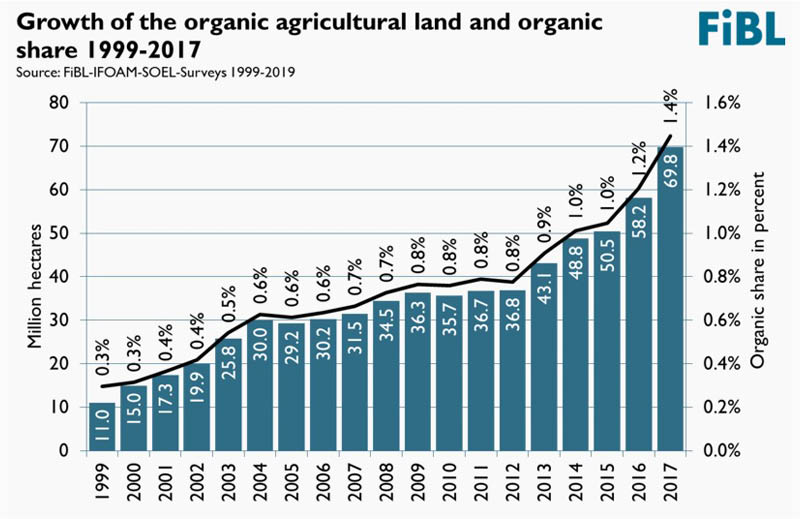
Organic production is a promising sector and a market requirement
; therefore, it is also important to highlight the competitive advantages of
organic certification and the increased profitability for small
producers, who can achieve added value by improving the quality
of their products.
Terms and Conditions and Application Process
COPAE oversees organic production standards at all stages of production, processing, and marketing of organic products. As such, COPAE is responsible for managing the following operator registries:
Restaurants that use organic products may use the designations protected by organic production standards to identify which ingredients in a particular dish, on a menu, or in the restaurant itself are organic.
To provide consumers with greater assurance that food comes from organic production, COPAE offers the option of recognizing restaurants as “partner establishments,” identifying inspected restaurants with a plaque.
To receive the COPAE Partner Establishment plaque, you must comply with the regulations governing the sale of organic products in food service establishments.
You can register with COPAE by submitting the Application for Registration in the Registry of Food Service Establishments. By signing the Agreement between COPAE and Participating Establishments, the establishment accepts the conditions that ensure organic products are properly identified and separated from non-organic products, and agrees to be subject to COPAE’s oversight. In return, COPAE will place a sign in your establishment identifying it as a COPAE partner establishment. From that moment on, it will appear on the List of Food Service Establishments Registered with COPAE.
Organic livestock farming is a production system in which the use of synthetic chemicals (chemical fertilizers, herbicides) and genetically modified organisms is not permitted. Organic livestock farming respects animal welfare by not interfering with their natural cycles, providing adequate housing, and ensuring access to pasture. The animals are fed organic forage and feed, obtained primarily from the farm itself. Health management is based on disease prevention through the selection of breeds adapted to the region, good management practices, and proper nutrition. Genetic diversity is promoted by using native breeds. Legislation on organic livestock farming establishes a series of conditions that must be met for production to be certified as organic. An organic farm must comply with a set of production principles and standards regarding pasture management, livestock, feeding, veterinary treatments, manure and slurry management, etc.
The adaptation phase during which organic production methods are incorporated into the production unit is known as the conversion period. This period applies to both animals and the land associated with animal production. The conversion period begins after the application to register the production unit with COPAE is submitted. From that moment on, organic production regulations must be followed, and the produce cannot be marketed as organic until the conversion period has ended.
The conversion periods are as follows:
- Plots used for the production of animal feed: 2 years.
- Horses and cattle raised for meat production: 12 months and never less than three-quarters of their lifetime.
- Animals raised for milk production: 6 months.
- Small ruminants and pigs: 6 months.
- Poultry intended for meat production (introduced before three days of age): 10 weeks.
- Poultry raised for egg production: 6 weeks.
In organic livestock farming, a simultaneous conversion of both the land and the animals is generally implemented, with a total duration of two years; the conversion of the livestock takes place during the final phase of the land conversion.
In Asturias, organically produced Asturian veal is marketed with certification from both COPAE and the Regulatory Council of the“Ternera Asturiana”PGI. To facilitate joint certification, both councils have signed a collaboration agreement. If you wish to register with the Regulatory Council for the“Ternera Asturiana”PGI, please contact them and they will guide you through the registration process. For more information on organic livestock production standards, you can download the Guide to Organic Livestock Farming.
For more information on organic livestock production standards, you can download the Guide to Organic Livestock Farming. Here you will find answers to questions about what organic livestock farming is, its benefits, how it is regulated, what requirements must be met, and what steps are necessary to certify a production system as organic, as well as the application process.
Guide to Organic Livestock Farming
In order for a livestock producer to certify their production as organic, they must register with the COPAE Farm Registry. To do so, they must follow these steps:
- Submit the following documents to COPAE:
Registration application
Annex
Agreement (request by phone) - Once the application is complete, a COPAE technician will schedule a date with the producer for the initial audit, which will involve a visit to the farm to verify the information provided in the application.
- Following the initial audit, the Certification Committee will establish the registration requirements and conversion periods. COPAE will communicate the decision.
- Once registered, the producer is required to maintain up-to-date records, which will be requested during follow-up or inspection visits. All livestock operations are required to maintain records of veterinary treatments, field operations (fertilization, planting), agricultural and livestock inputs (feed, forage, seeds), records of product harvests and shipments (crops and forage), records of livestock management and housing (including the date of weaning, entry into the feedlot, and periods of housing), and records of animal feeding (type of feed and rations used).
- Once the initial monitoring phase is complete, COPAE technicians will conduct periodic follow-up visits, which may be announced in advance or unannounced.
Beekeeping is an important activity for environmental protection and agroforestry production thanks to the pollinating role of bees.
Organic beekeeping is a production system in which the use of synthetic chemicals is not permitted.
The use of synthetic chemicals, such as acaricides, for the treatment of parasites like Varroa jacobsoni is not permitted.
The use of antibiotics as a preventive treatment for diseases is not permitted.
Bee health is based on disease prevention through the selection of breeds adapted to the region, good management practices, and proper feeding, ensuring that sufficient reserves of honey and pollen are left in the hive to get through the winter.
The wax must be replaced with wax from the farm itself or with wax from other organic farms.
The settlements must be located in areas with natural vegetation and organic crops, and have access to water in places where there is no risk of contamination.
Conversion periods:
The adaptation phase during which organic production methods are incorporated into the production unit is known as the conversion period; this period applies to beekeeping products. The conversion period begins after the application to register the production unit with COPAE. From that moment on, organic production regulations must be followed, and the operation is subject to inspection. During the conversion period, the wax must be replaced with organically produced wax. Beekeeping products may only be sold with references to organic production methods once organic production regulations have been complied with for at least one year.
For more information on production standards for organic beekeeping, you can download the Guide to Organic Beekeeping. Here you will find answers to questions about what organic beekeeping is, its benefits, how it is regulated, what requirements must be met, and what steps are necessary to certify a production as organic, as well as the application process.
In order for a beekeeper to certify their production as organic, they must register with the COPAE Farm Registry. To do so, they must follow these steps:
1. Submit the following documents to COPAE:
Registration application
Annex
Agreement (Request the document by phone or email)
2. Once the application is complete, a COPAE technician will schedule a date with the producer for the initial audit, during which the technician will visit the farm to verify the information provided in the application.
3. Following the initial audit, the Certification Committee will establish the registration requirements and conversion periods. COPAE will communicate the decision.
4. Once registered, the producer is required to maintain up-to-date records, which will be requested during follow-up or inspection visits. Every operation is required to keep records of veterinary treatments, interventions on the hives, incoming products, harvesting, and outgoing products, etc.
5. Once the initial monitoring phase is complete, COPAE technicians will conduct periodic follow-up visits, which may be announced or unannounced.
The recent approval of organic aquaculture standards for trout production enables fish farms in Asturias to adopt this type of production, since the water quality of Asturian rivers is perfectly suited to organic trout farming.Through certification, this product can be distinguished from that produced using other, more intensive and environmentally harmful systems.
Terms and Conditions:
Raising trout using organic farming methods is another way of approaching aquaculture, distinct from traditional intensive systems.
The hallmark of this production system is the integration of fish farms into the natural environment; the water used for raising the fish is mountain water, sourced near river headwaters or from springs. The fish are raised in ponds with sufficient space to allow for swimming, and the rearing period is longer than that used in intensive farming, better mimicking the conditions of wild fish. The feed is very natural, based primarily on fish meal from wild-caught fish, with a portion of plant-based ingredients sourced from organic farming.
Download the organic trout production standards for more information. If you are interested in applying for registration in the COPAE Producers Registry, go to the “Application Process” section.
Organic Trout Production Standards
To certify production as coming from organic aquaculture, you must contact COPAE, the only body authorized to certify organic production in Asturias.
All stages of production and processing of organic products must comply with the requirements set forth in Regulation (EC) No. 834/2007 and be subject to its oversight; therefore, the processing of organic foods—whether for human consumption or animal feed—may only take place in facilities registered with COPAE.
Operators who store or market organic products, as well as those who import products from third countries (outside the European Union), must also be registered with COPAE.
Organic food processing may take place in facilities dedicated exclusively to organic products or in facilities that also process non-organic products. In the latter case, the processing of organic products must be kept separate—either in time or in space—from non-organic food to ensure that there is no risk of mixing or substitution. Organic food processing operations may only be carried out after the facilities and production equipment have been cleaned.
Only agricultural ingredients from organic production may be used. Non-agricultural ingredients, processing aids, and additives that may be used are those listed in the positive list of Regulation (EC) No. 834/2007.
For more information on production standards, you can download the Guide to the Production and Processing of Organic Products. Here you will find answers to questions about what organic production is, its benefits, how it is regulated, what requirements must be met, and what steps are necessary to certify a food product as organic, as well as the certification process.
Industrial Processing
In order for a company to certify its production as organic, it must register with the COPAE Producers Registry. To do so, it must follow these steps
- Submit the following documentation to COPAE:
- Once the application is complete, a COPAE technician will schedule a date with the producer for the initial audit, during which the technician will visit the farm to verify the information provided in the application.
- Following the initial audit, the Certification Committee will establish the registration requirements and conversion periods. COPAE will communicate the decision.
- Once registered, the operator must report the start of operations and is required to maintain an up-to-date record of documentation, which will be requested during follow-up visits or inspections: records of incoming goods, records of outgoing goods, production reports—to ensure product traceability at all times—and inventory records. In addition, a quarterly declaration of organic product sales must be submitted to COPAE. Labels and advertising materials for organic products must be pre-approved by COPAE.
- Once the initial monitoring phase is complete, COPAE technicians will conduct periodic follow-up visits, which may be announced or unannounced.
Import Clearance
1. Products imported from a third country may be marketed as organic only if they originate in a third country included on the list of authorized countries maintained by the Ministry of Agriculture, Fisheries, and Food.
2. The importer must obtain the official records required by current regulations and be certified by the relevant organic agricultural production control body.
3. If you are interested in applying for this certification, please contact COPAE.
For more information on the list of authorized countries and the importer registry, please visit the website of the Ministry of Agriculture, Fisheries, and Food.
The use of the terms “ECO,” “BIO,” “ecological,” “biological,” and “organic” in establishments or on food labels and in advertising is governed by European organic production standards.
To sell organic products in bulk or in smaller quantities, retailers are required to be registered with COPAE, as this activity must be subject to the control system, as established in the European regulations on organic production and in the Resolution of March 9, 2018, issued by the Department of Rural Development and Natural Resources, which regulates certain exemptions from the control regime for retailers in the Principality of Asturias who sell organic products directly to consumers or end users.
To obtain certification, retailers must ensure the origin of organic products and their proper identification. Retailers that sell both organic and non-organic products must implement measures to keep them separate in order to prevent any risk of mixing or cross-contamination, as well as to avoid confusion among consumers.
To sell organic products in bulk or in smaller quantities, retailers are required to be registered with COPAE, as this activity must be subject to the control system established by European regulations on organic production.
Registration with COPAE is processed by submitting the Application for Registration in the Retail Business Registry. By signing the application, the establishment agrees to comply with the organic production standards and the controls set forth in its Regulations. In cases where both organic and non-organic products are sold, retailers must implement measures to keep them separate in order to prevent any risk of confusion among consumers.
Once the application and the necessary documentation have been received, COPAE will conduct an initial visit. After passing the inspections and ensuring compliance with organic production standards, COPAE issues a certificate of compliance. From that point on, the business will be listed in the Registry of Retail Businesses, where it can be searched by type of business or by location.
Restaurants that use organic products may use the designations protected by organic production standards to identify which ingredients in a particular dish, on a menu, or in the restaurant itself are organic.
To provide consumers with greater assurance that food comes from organic production, COPAE offers the option of recognizing restaurants as “partner establishments,” identifying inspected restaurants with a plaque.
To receive the COPAE Partner Establishment plaque, you must comply with the regulations governing the sale of organic products in food service establishments.
Frequently Asked Questions
Who can give me information?
Before applying for certification, it is very important to be familiar with the organic production standards and to understand the steps that must be taken to ensure compliance. The general conditions for each type of activity are detailed below. If you have any questions or need clarification regarding the regulations, it is best to contact COPAE’s technical support team directly.
How long does it take?
It is important to note that agricultural and livestock production must undergo a conversion period before the products can be marketed as organic. The standard conversion period is usually 2 years, though it may be extended to 3 years for fruit crops or reduced to 12 months for plots where it can be demonstrated that no prohibited products have been used during the past 3 years.
Certification of processing and marketing companies is faster, since there are no conversion periods in these cases.
How much does it cost?
COPAE publishes its fee schedule, which explains the costs of certification. COPAE Fees
How do I apply?
The certification process begins with an application for registration with COPAE. Once all the documentation has been received, COPAE schedules a visit to conduct an initial audit. The inspection report is reviewed by the technical department. Certification decisions are made by the Certification Committee, the final step before issuing the certificate of conformity, which authorizes the use of protected designations on labeling and in advertising to market products as organic.
