Organic Production
Definition
Regulation (EU) 2018/848 of the European Parliament and of the Council of May 30, 2018, on organic production and the labeling of organic products, and repealing Council Regulation (EC) No. 834/2007, defines organic production as follows:
“Organic production is a comprehensive system of agricultural management and food production that combines best practices in environmental and climate management, a high level of biodiversity, the conservation of natural resources, and the application of strict standards for animal welfare and production that meet the demand—expressed by a growing number of consumers—for products derived from natural substances and processes.
Thus, organic production plays a dual social role: on the one hand, it supplies a specific market that meets consumer demand for organic products, and on the other, it provides the public with benefits that contribute to environmental protection, animal welfare, and rural development.”
Organic Farming in Asturias
An ideal environment for organic production
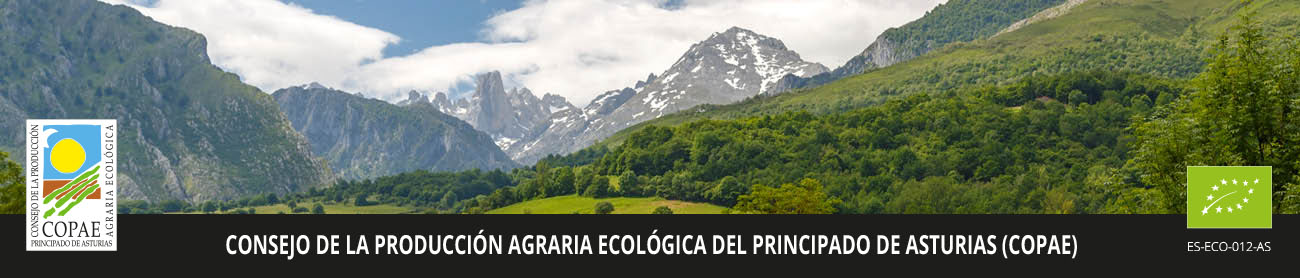
Asturias offers exceptional natural conditions for organic farming. Moist and mountain pastures interspersed with forested areas cover most of the region’s land area. We have the climate, water, soil, and biodiversity.
Local crop varieties and native breeds also play a key role in the development of organic production, due to their adaptation to the environment and resistance to disease.

Agriculture
Most of the cultivated farmland in Asturias is planted with local apple varieties, which are used to make juice and cider.
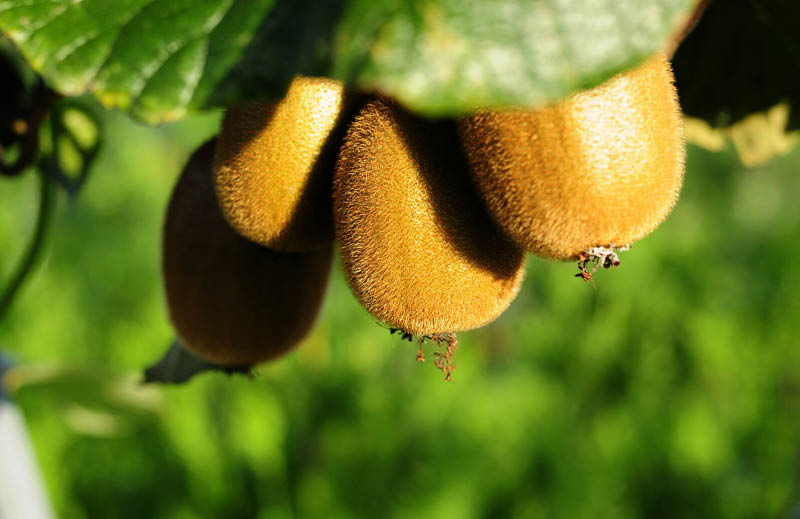
Other important crops include blueberries and other small fruits, kiwifruit, and other varieties of fruit. The climate is also ideal for certain nuts, such as chestnuts, walnuts, and hazelnuts.
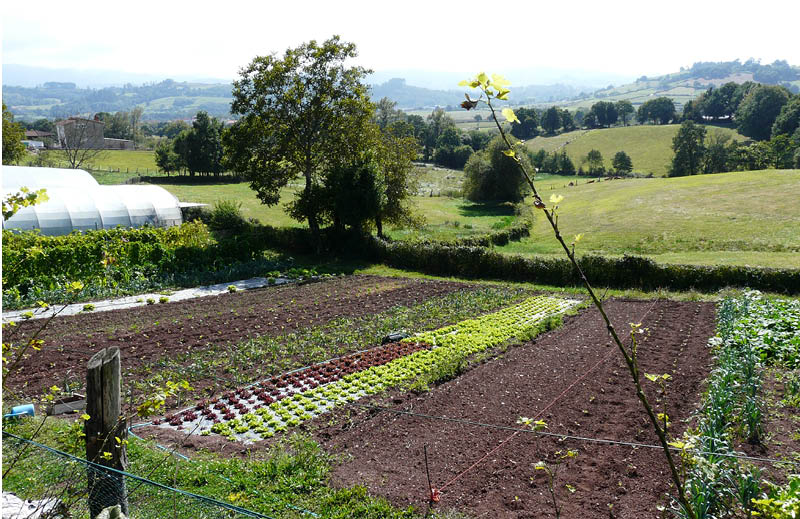
In horticulture, small-scale production with a wide variety of crops predominates. Some of the traditional crops grown here, using local varieties, include fava beans and spelt.
Livestock Farming
Asturias is a region primarily devoted to livestock farming, where traditional management practices linked to the use of pasture and forage from the farm itself are still in place. This makes the transition to organic production less complicated than it is for more intensive farming systems.
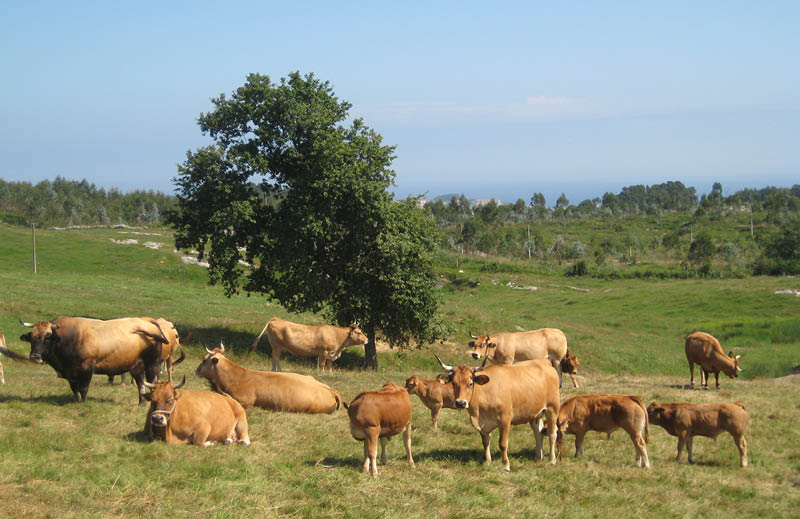
Most of the cattle farms raise beef cattle of the native Asturiana de Los Valles or Carreñana and Asturiana de la Montaña or Casina breeds. Most organic cattle farms are members of the Regulatory Council for the Ternera Asturiana PGI.
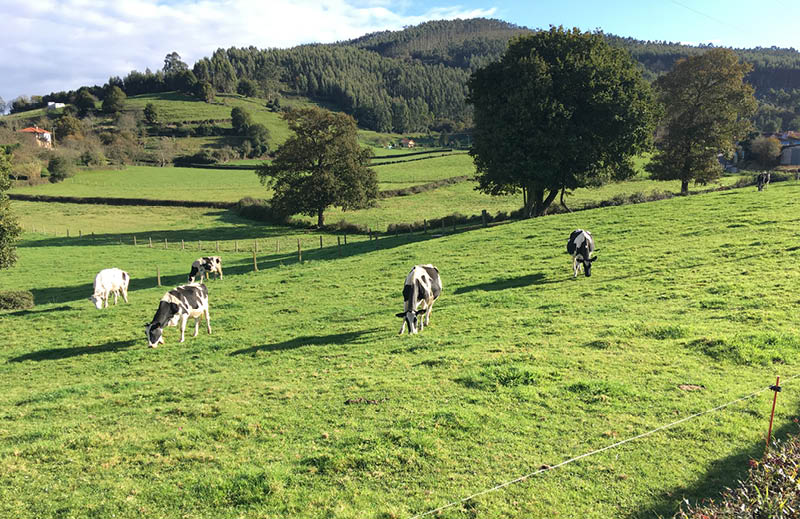
Dairy cattle farming is another of the most important activities with great potential for organic production in Asturias. The main breed is the Holstein, although there are also other, more hardy breeds that are well-suited to grazing.
The number of sheep and goat farms is lower. Organic production includes some of the largest herds of the endangered native Asturian breeds, the Xalda sheep and the Bermeya goat.
As is generally the case in Asturias, there are fewer livestock farms—such as those raising horses—in organic production, and there are few poultry and swine farms.
Beekeeping
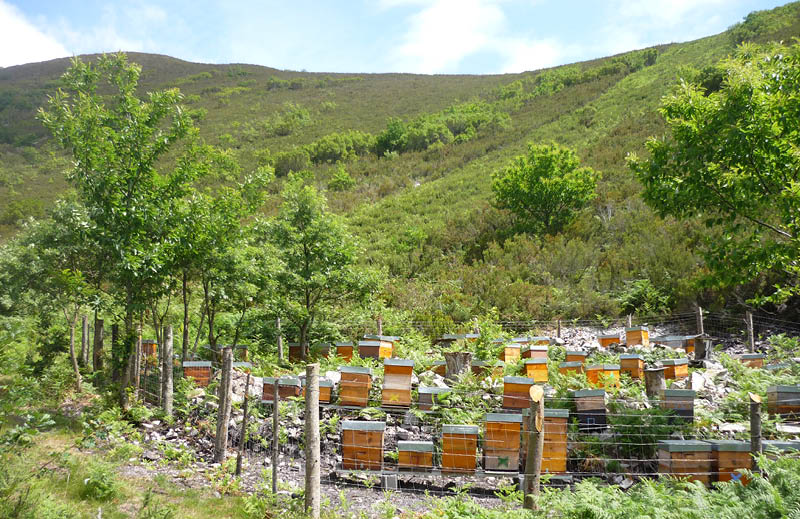
Asturias is a paradise for bees thanks to the diversity of food they find in wild vegetation, forests, pastures, and traditional crops, such as apple trees.
Various types of honey are produced in Asturias; in addition to wildflower honey, there are single-flower honeys made from eucalyptus, chestnut, heather, oak, and more…
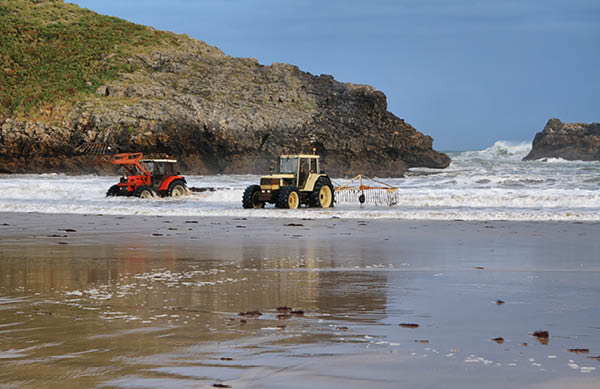
Aquaculture and Algae
Organic production regulations cover both aquaculture and the cultivation and harvesting of seaweed.
The excellent water quality of Asturian rivers and the Cantabrian Sea makes it possible to raise trout organically, farm oysters, and cultivate and harvest various species of seaweed.
Processed foods
There is an ever-increasing variety of organic foods produced in Asturias. The COPAE registry of producers includes everything from small artisanal businesses to large agri-food industries. Some businesses are closely tied to primary production and the local market through short supply chains, while others handle larger volumes and are expanding into international markets.
Industrial activities related to plant-based production involve a wide range of products, from canned vegetables, juices, cider, and baked goods to livestock feed.
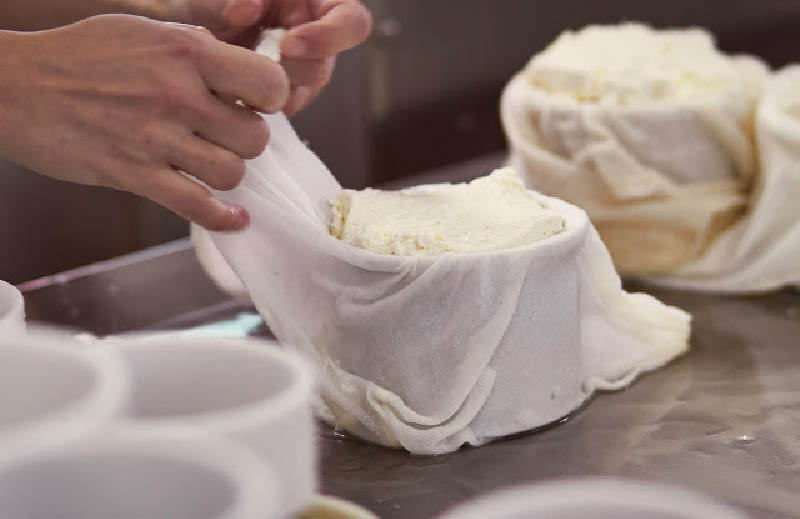
Among animal-based products, the meat and dairy industries stand out, ahead of other products such as honey, eggs, and canned fish.